KODA Kenkō Clinical and Hospital Platform · Clinics and hospitals in Japan

Hospital administration from A to Z, with every step on record.

Six modules take on the paperwork around care: intake, referrals, claims, clinical notes, remote consultations, home visits, prescriptions and the hospital’s daily operations. AI prepares the work; your clerks, doctors, nurses and pharmacists approve it. It runs above the systems you already have.

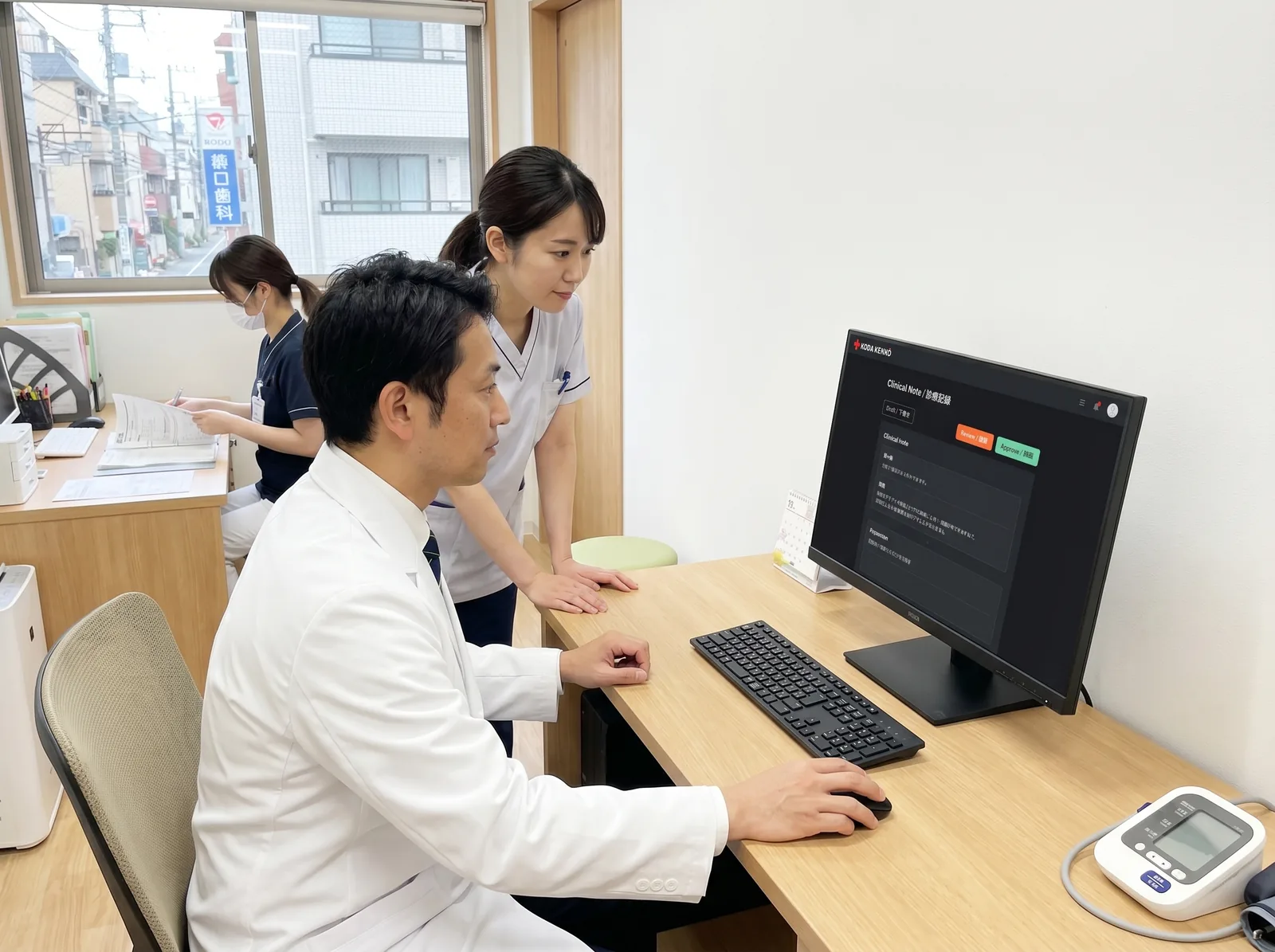
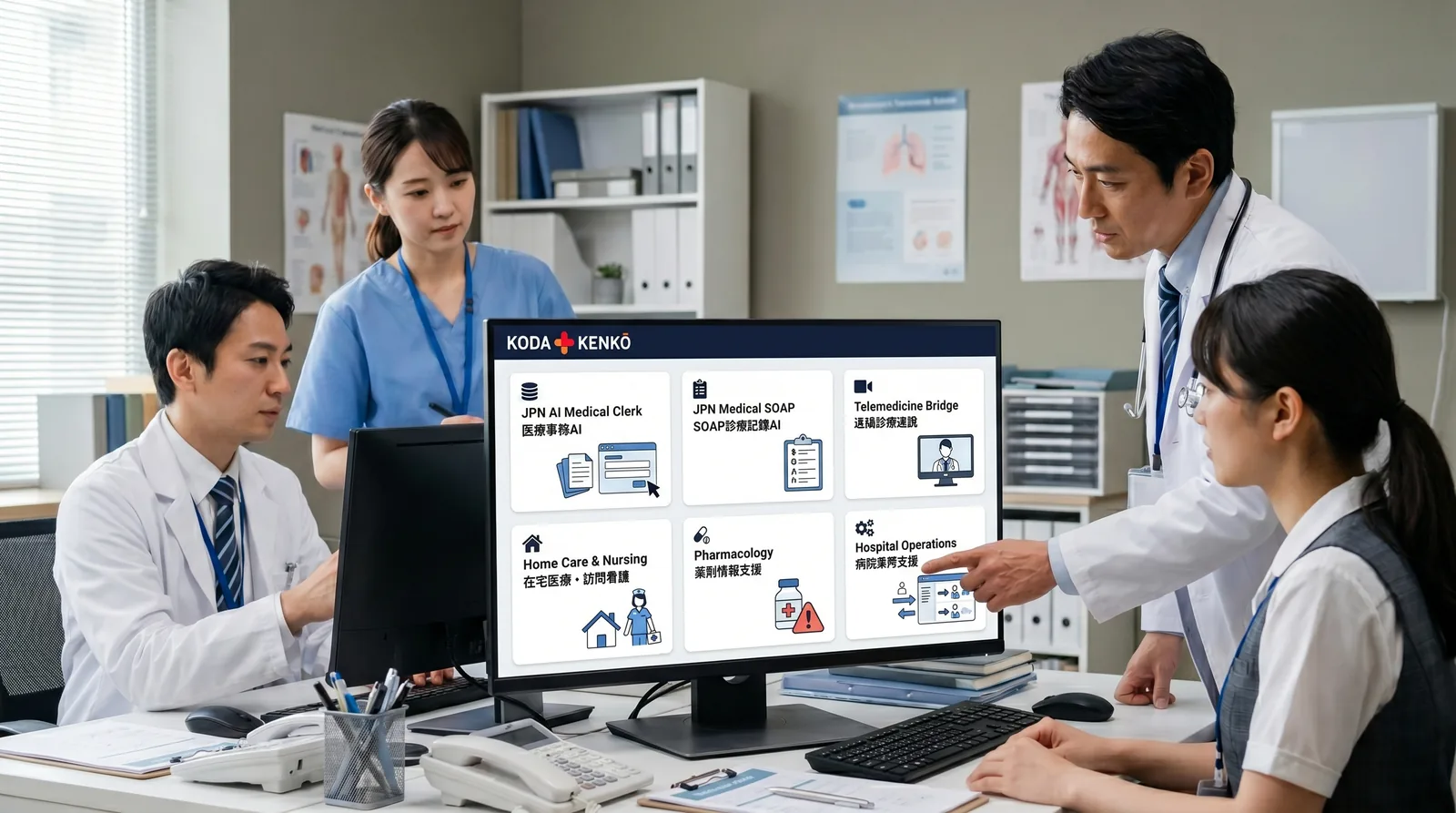
Doctors, nurses and a clerk at a Japanese clinic working together at the KODA Kenkō screen

For hospital and clinic directors

What changes in your hospital

Your staff spend less time preparing paperwork and more time with patients, and you keep a complete record of who did what.

Less retyping at the front desk

Intake, referral letters and claims arrive drafted. Your clerks check, correct and approve.

The note is ready when the consultation ends

Japanese clinical notes drafted from the consultation, reviewed and signed by the doctor.

One record from clinic to home to pharmacy

What the nurse, pharmacist and remote doctor record joins the same operational record.

An audit trail you can show

Every reviewer, timestamp and change is recorded, ready for internal review and inspection.

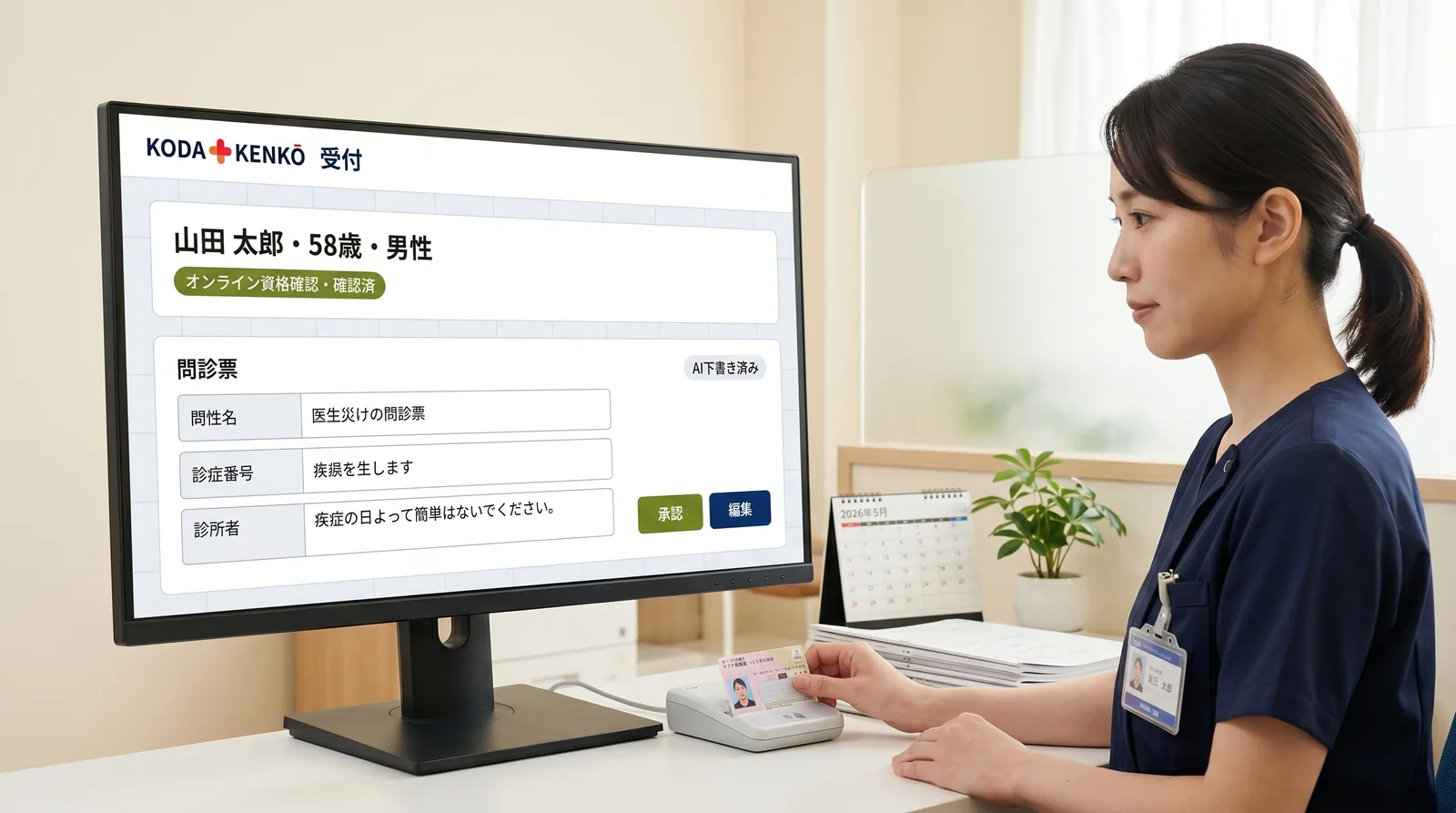
A receptionist confirms a patient’s intake on the KODA Kenkō reception screen

The operational record

Every piece of work leaves a reviewed record.

Kenkō turns the work around each patient into an operational record: what was collected, what AI drafted, what was checked, who reviewed it and what they changed. Your existing systems keep the clinical data; Kenkō keeps the trail of how the work was done.

  1. CollectIntake, referrals, dictation and prior records gathered in one place.
  2. OrganiseStructured by patient, encounter and task, in Japanese.
  3. DraftAI drafts the note, letter, claim or care entry.
  4. VerifyA second, independent model checks the draft against the sources.
  5. ReviewThe responsible professional corrects and approves.
  6. RecordOnly approved work enters the operational record.

Every reviewer, timestamp and change recorded.

Six modules

One platform for every role in the hospital

Start with the module where time is lost today and add the others when they are useful. Each one writes to the same operational record.

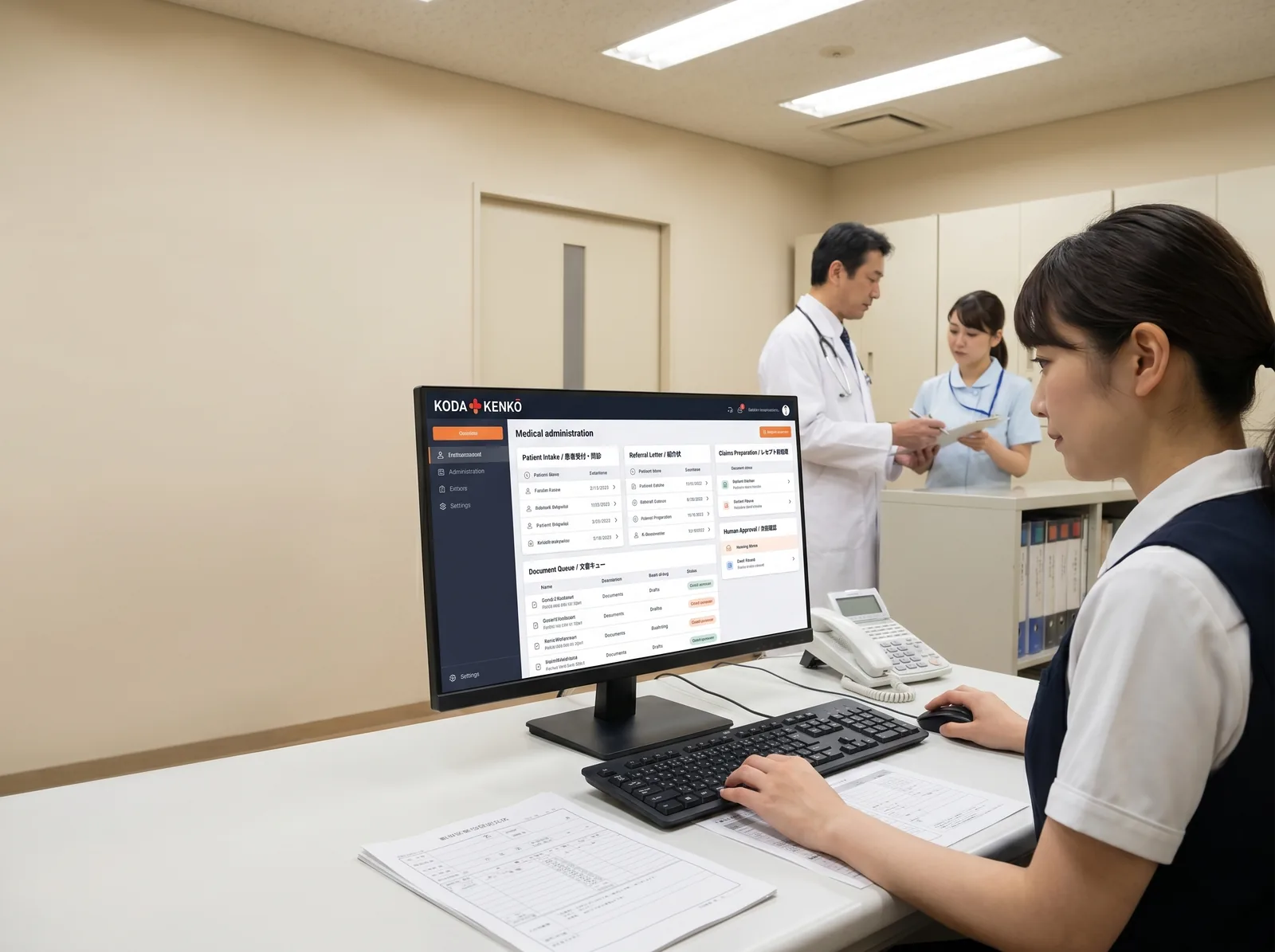
A medical clerk at a clinic reception desk reviewing drafts on the KODA Kenkō screen

For the front desk and medical office

AI Medical Clerk

Intake, referrals and claims drafted by AI, approved by the clerk.

  • Online and paper intake turned into a structured record
  • Referral letters read and summarised on arrival
  • Claim drafts prepared to Japanese rules, never submitted without approval
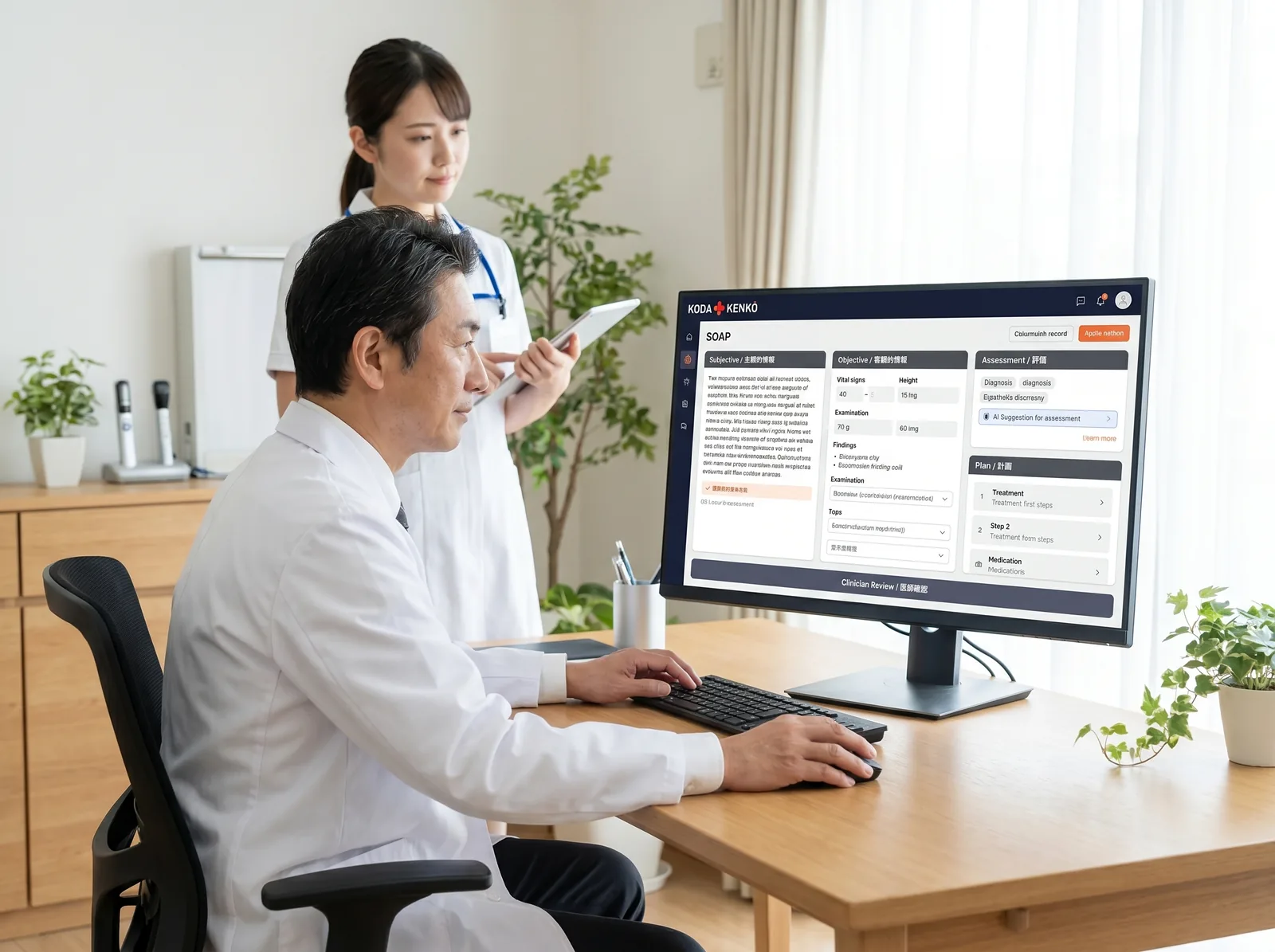
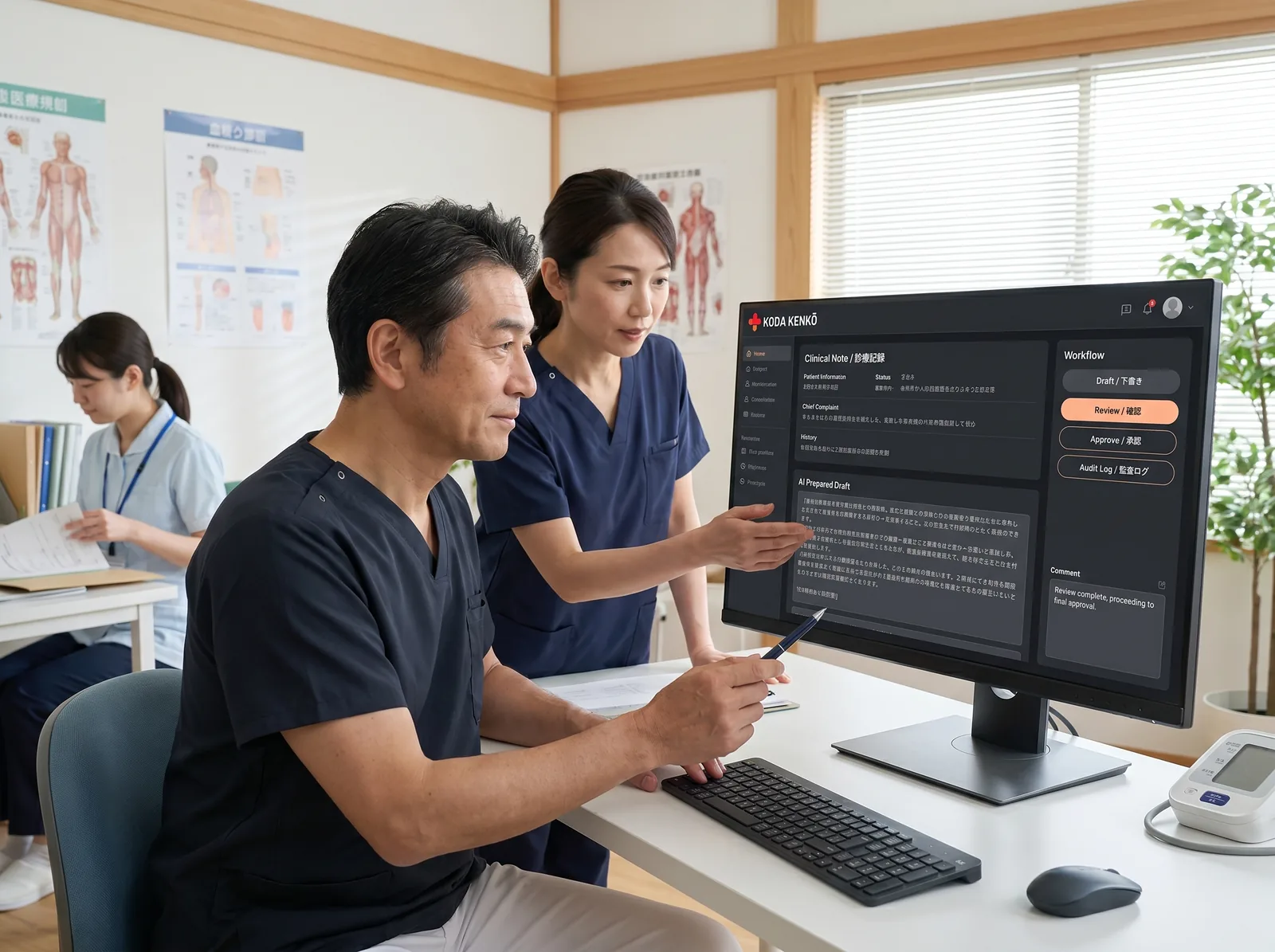
A doctor reviewing a SOAP note on screen while a nurse stands beside him

For the doctor

Medical SOAP

Japanese clinical notes, drafted from the consultation and reviewed by the clinician.

  • Subjective, Objective, Assessment and Plan in Japanese clinical style
  • Dictation that understands regional Japanese
  • Nothing becomes a record until the doctor signs
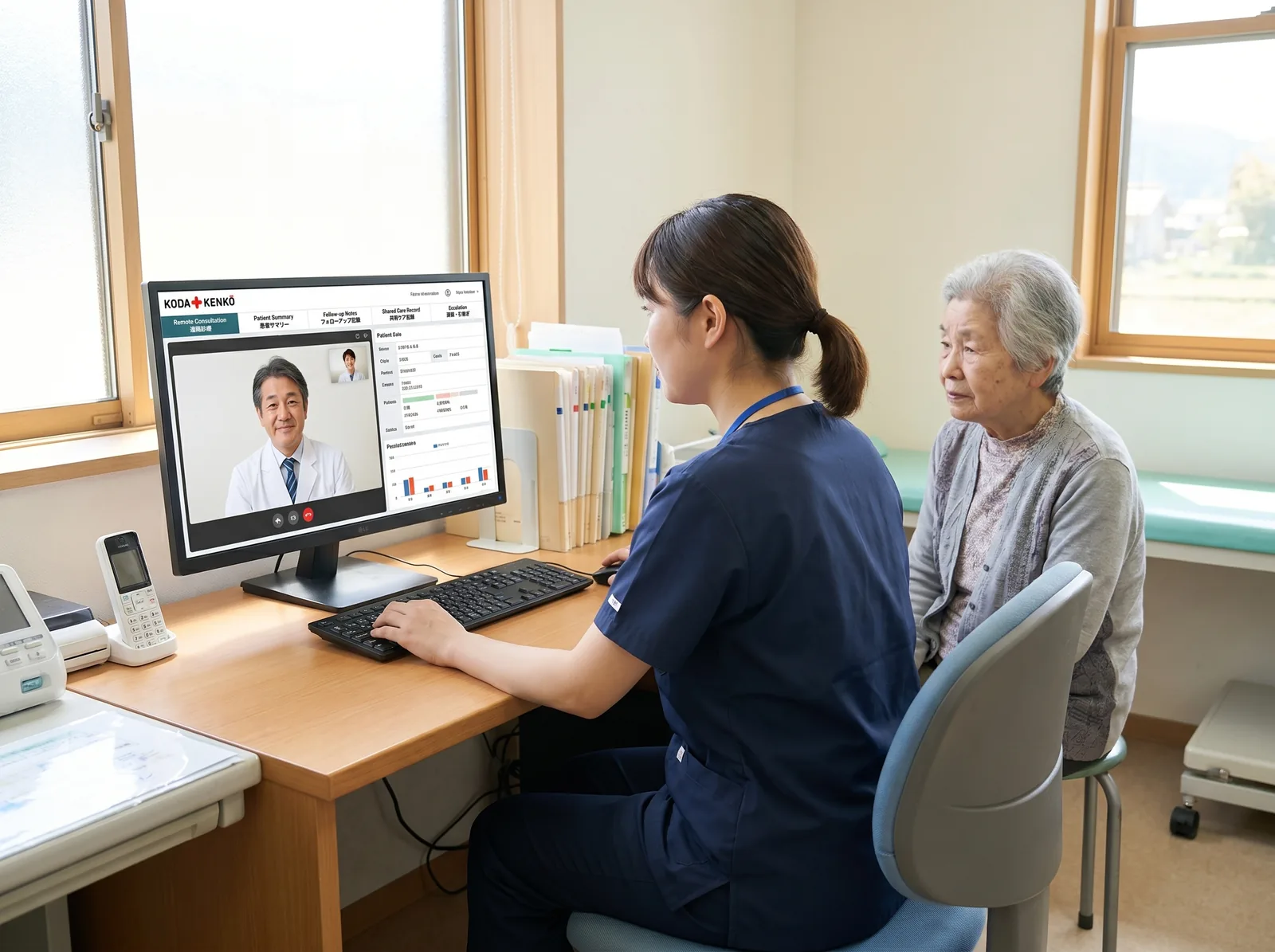
A nurse helps an older patient join a video consultation with a doctor

For the doctor and the patient at home

Telemedicine Bridge

Remote care prepared like an in-person visit, with one shared record.

  • Case preparation before the call
  • A shared bilingual record, documented in Japanese
  • Asynchronous follow-up between consultations
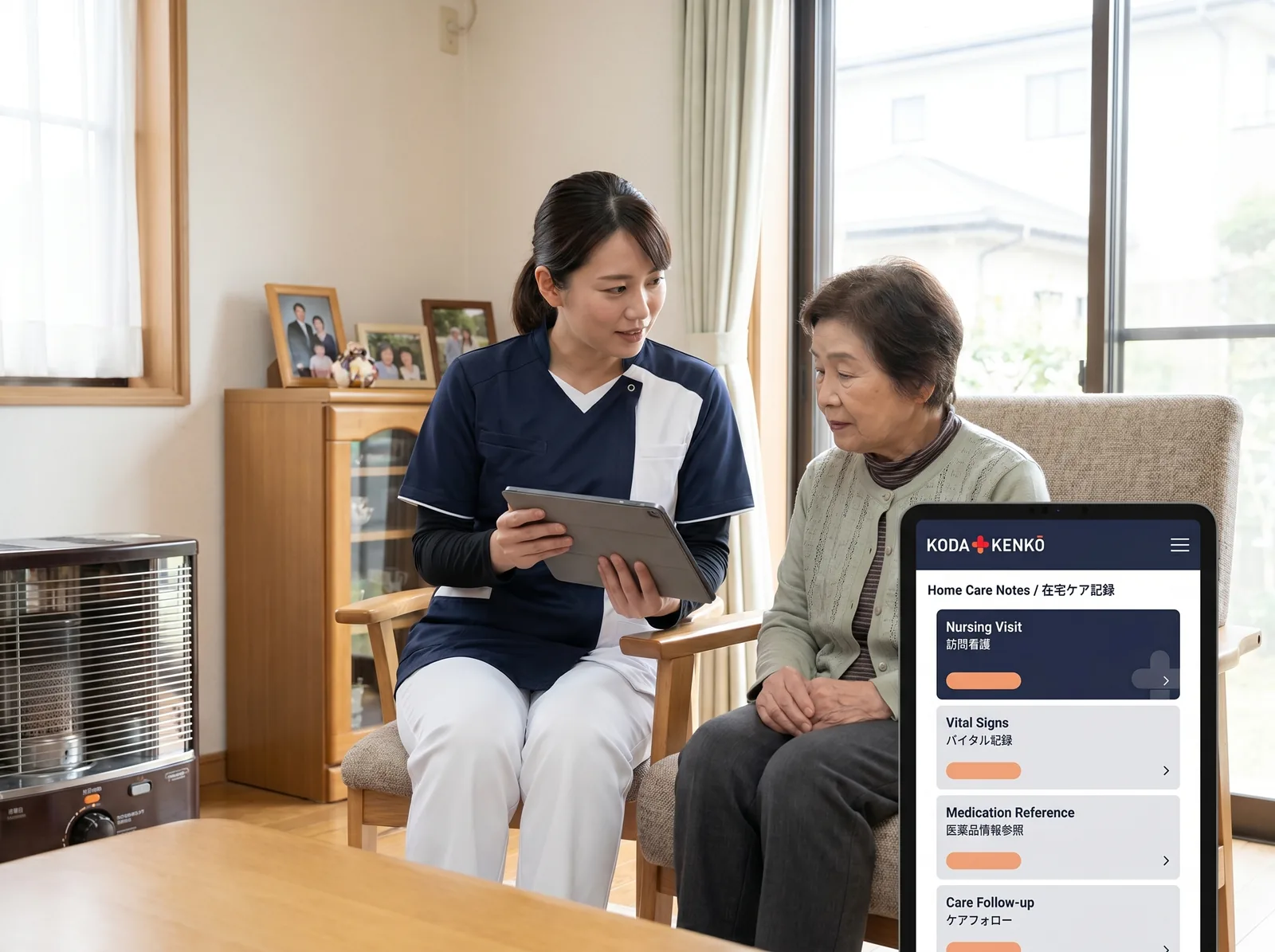
A visiting nurse reviews a care record on a tablet with an older woman at home

For the visiting nurse

Home Care & Nursing

Visit notes, vital signs and medication reference, at the patient’s side.

  • Visit notes captured during the round
  • Vital signs recorded and trended
  • Medication reference for visiting nurses, shared with the clinic
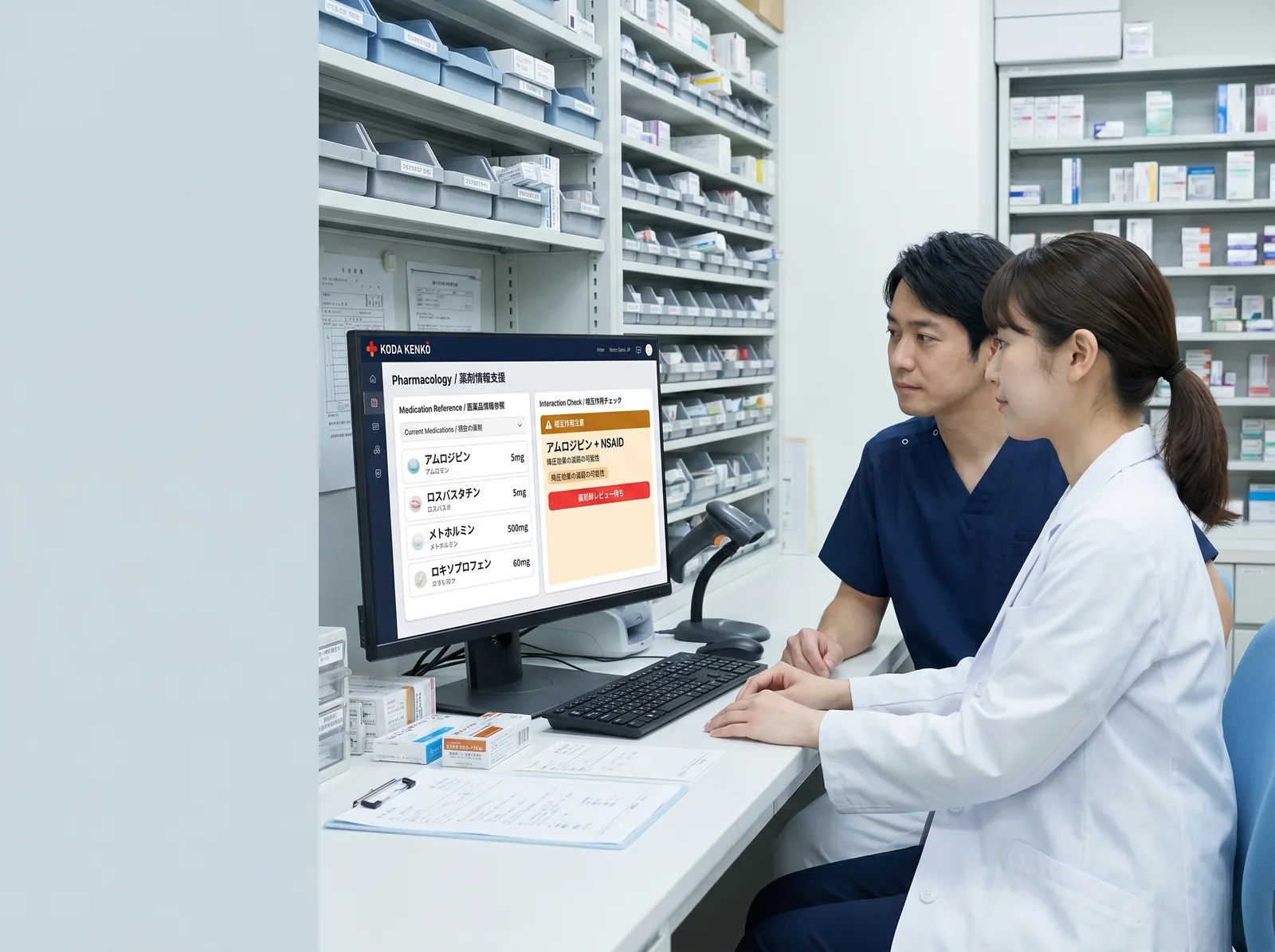
A pharmacist and a doctor check a prescription on screen in the hospital pharmacy

For the pharmacist

Pharmacology

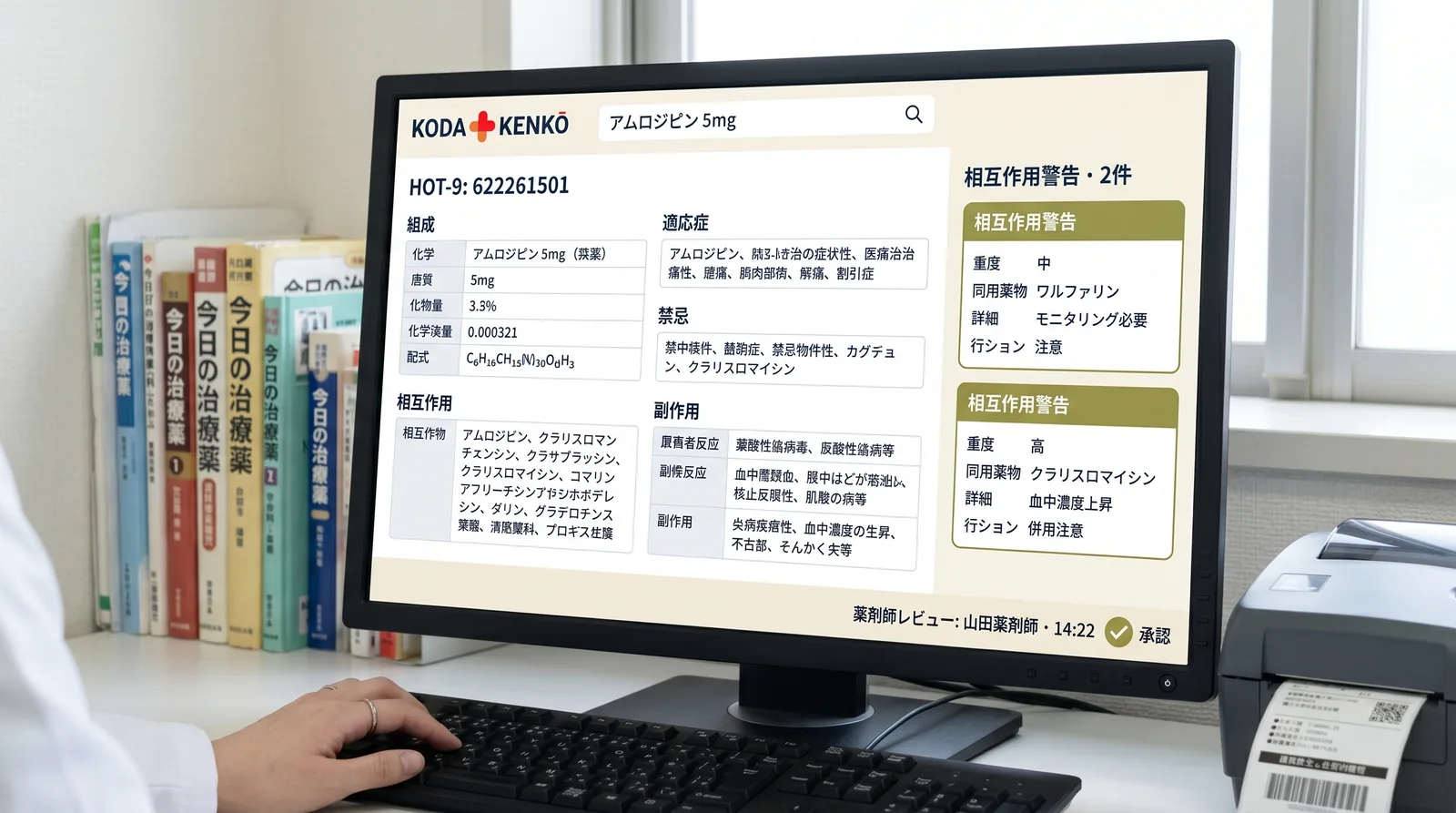
Interaction checks on a HOT-code-native Japanese drug master, reviewed by the pharmacist.

  • HOT-code-native Japanese drug master
  • Interaction and dosage checks arrive as suggestions
  • Cross-border medication reference for foreign patients
Hospital staff coordinating the day’s operations in front of a monitor

For hospital management

Hospital Operations

Beds, equipment, rosters and teams visible to the people who coordinate them.

  • Bed occupancy, ward by ward
  • Equipment booking and shift rosters
  • Team coordination across departments

Built for Japanese practice

Understands your patients. Writes like your clinic.

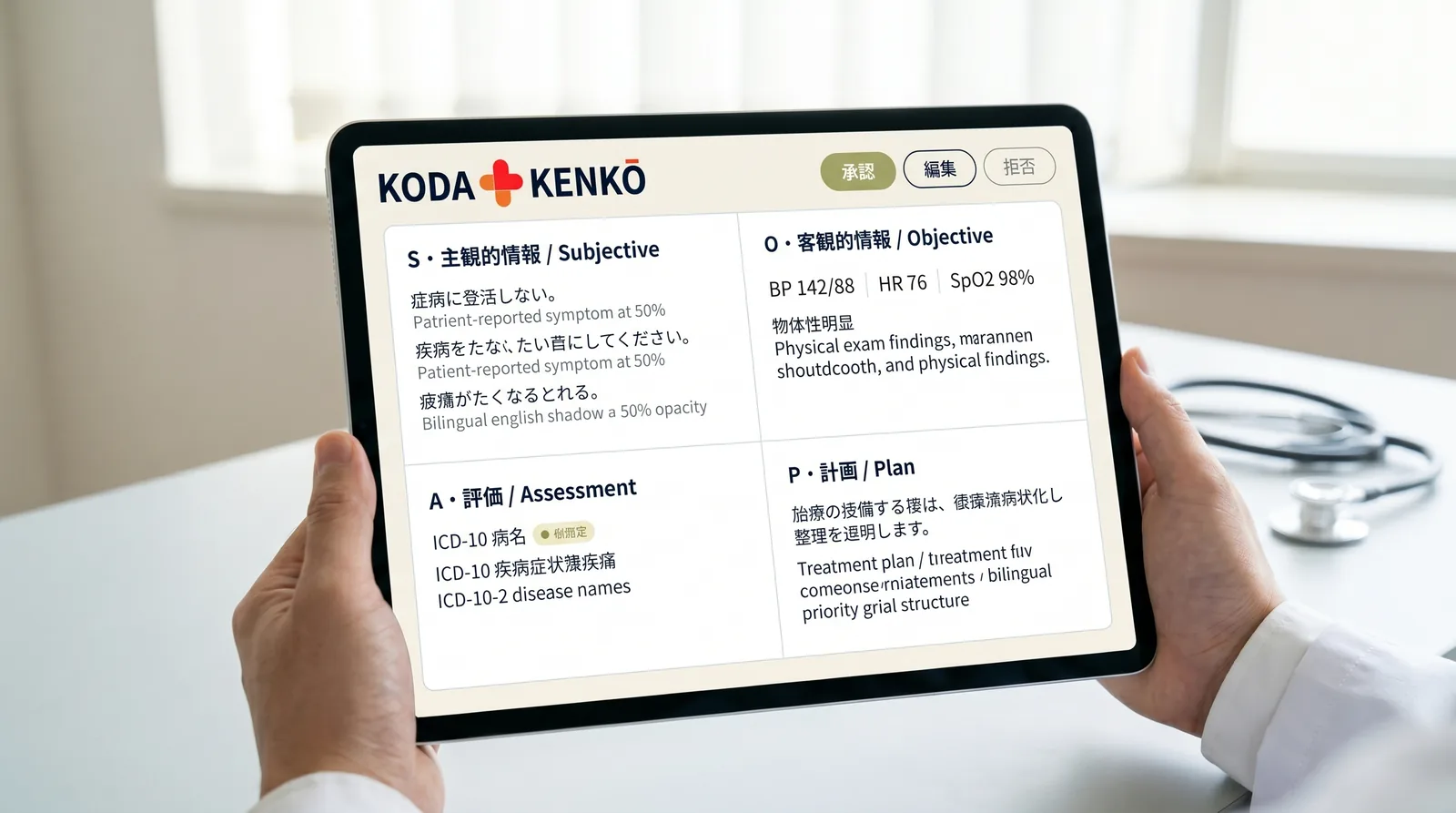
A bilingual SOAP note on a tablet: Japanese with an English reading aid

Bilingual records, documented in Japanese

Patients describe symptoms in their own language. The clinic keeps the record in Japanese.

EnglishPortugueseChineseVietnameseTagalogNepali
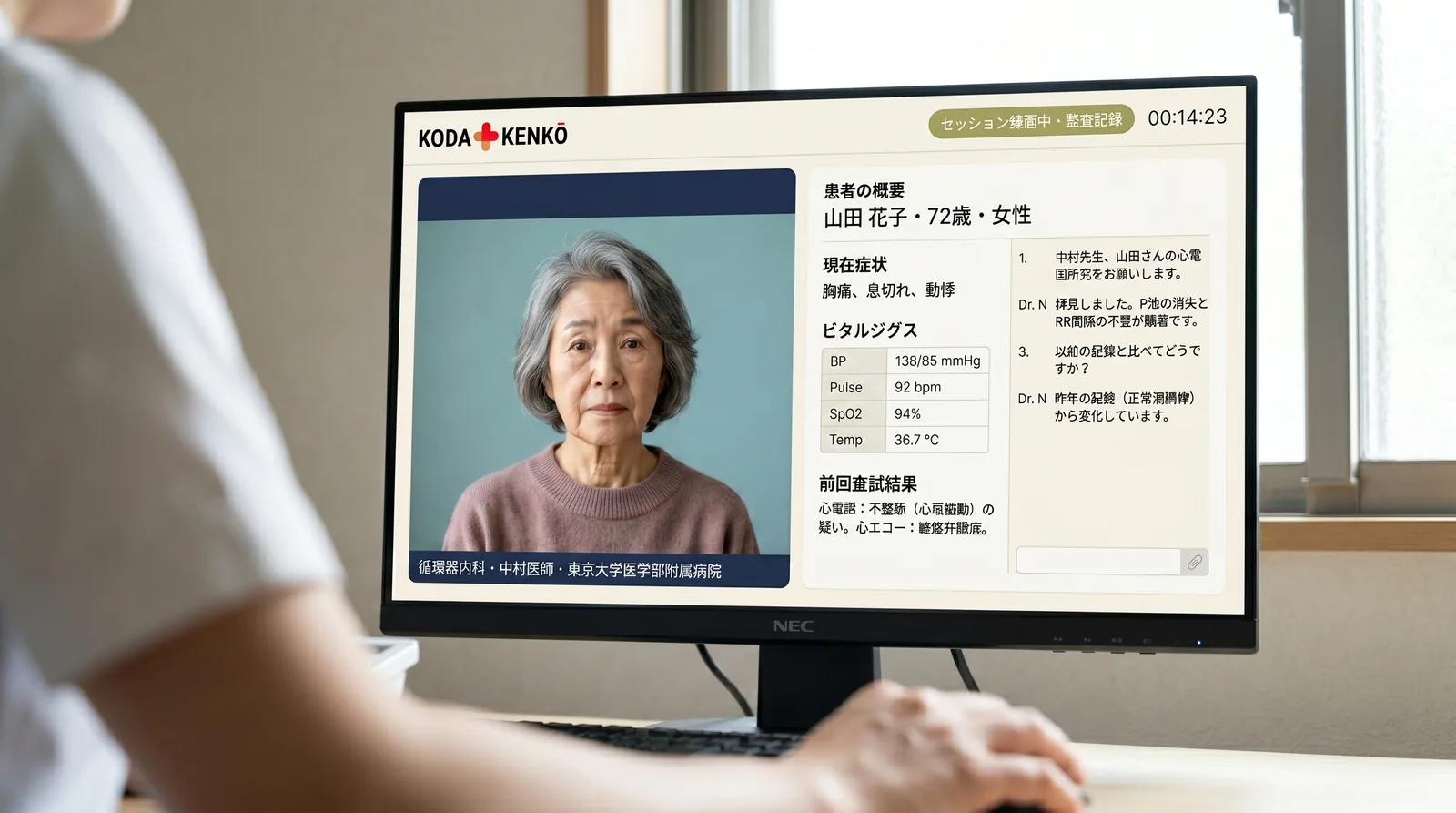
A doctor’s screen during a consultation, with the patient on video and the record beside her

Regional Japanese dictation

Dictation that follows the way patients and doctors actually speak, across Japan’s regions.

KansaiTōhokuKyūshūHokkaido
The Japanese drug master with a HOT code and interaction notes on screen

Cross-model verification

Every draft is checked by a second, independent model before a professional sees it, so reviewers start from a draft that has already been tested.

Inside the platform

Built for the front desk and the consultation room

The screens your staff work in, in Japanese.

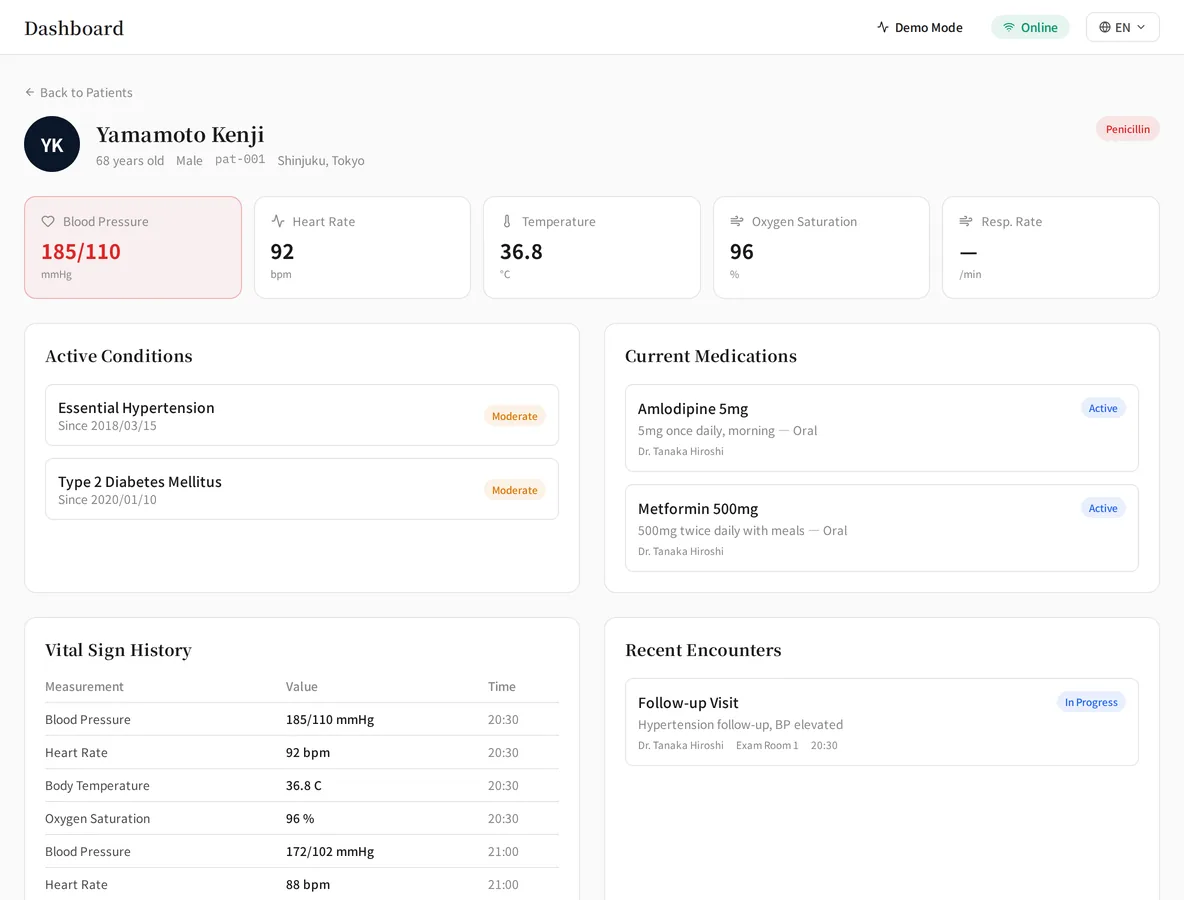
Patient record with vital signs, conditions, medication and encounters
Patient record
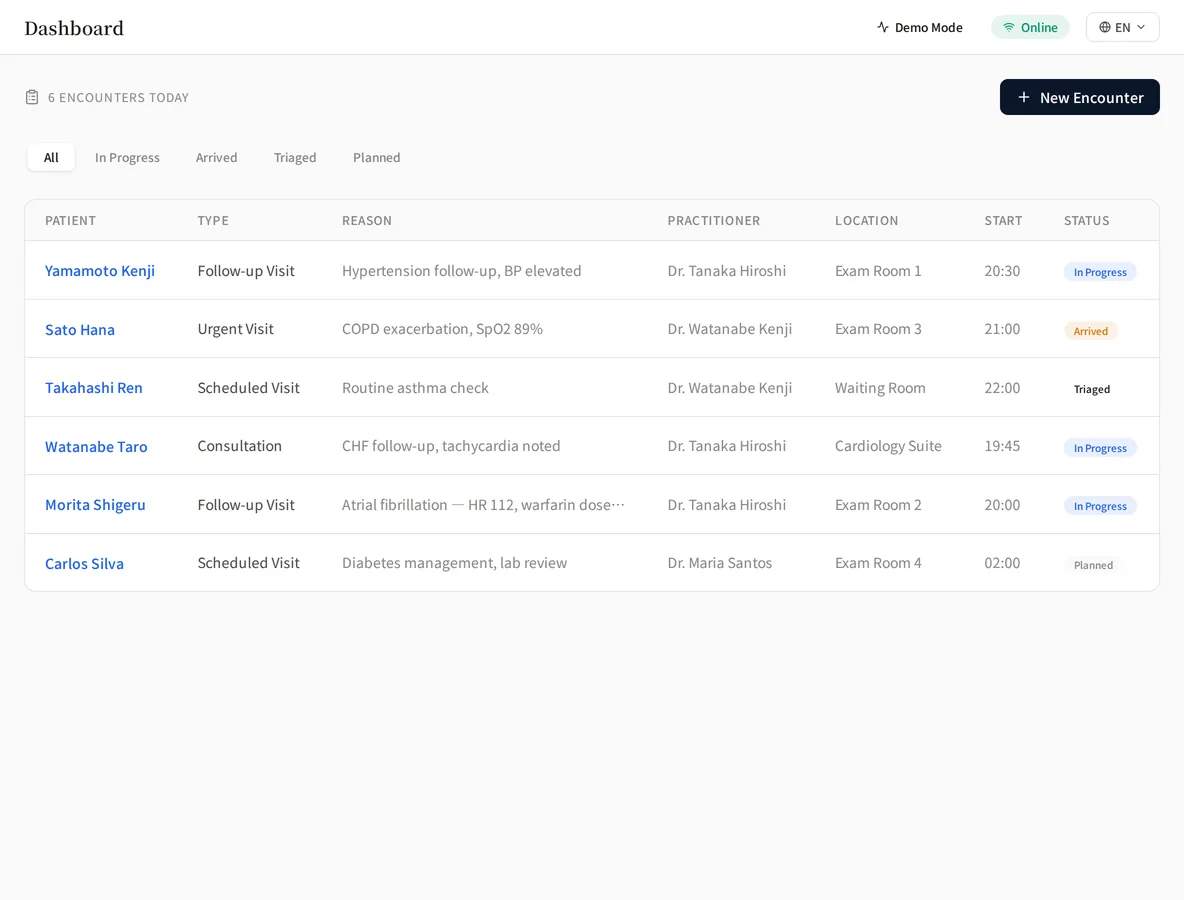
Today’s encounters with reason, practitioner, room and status
Today’s encounters
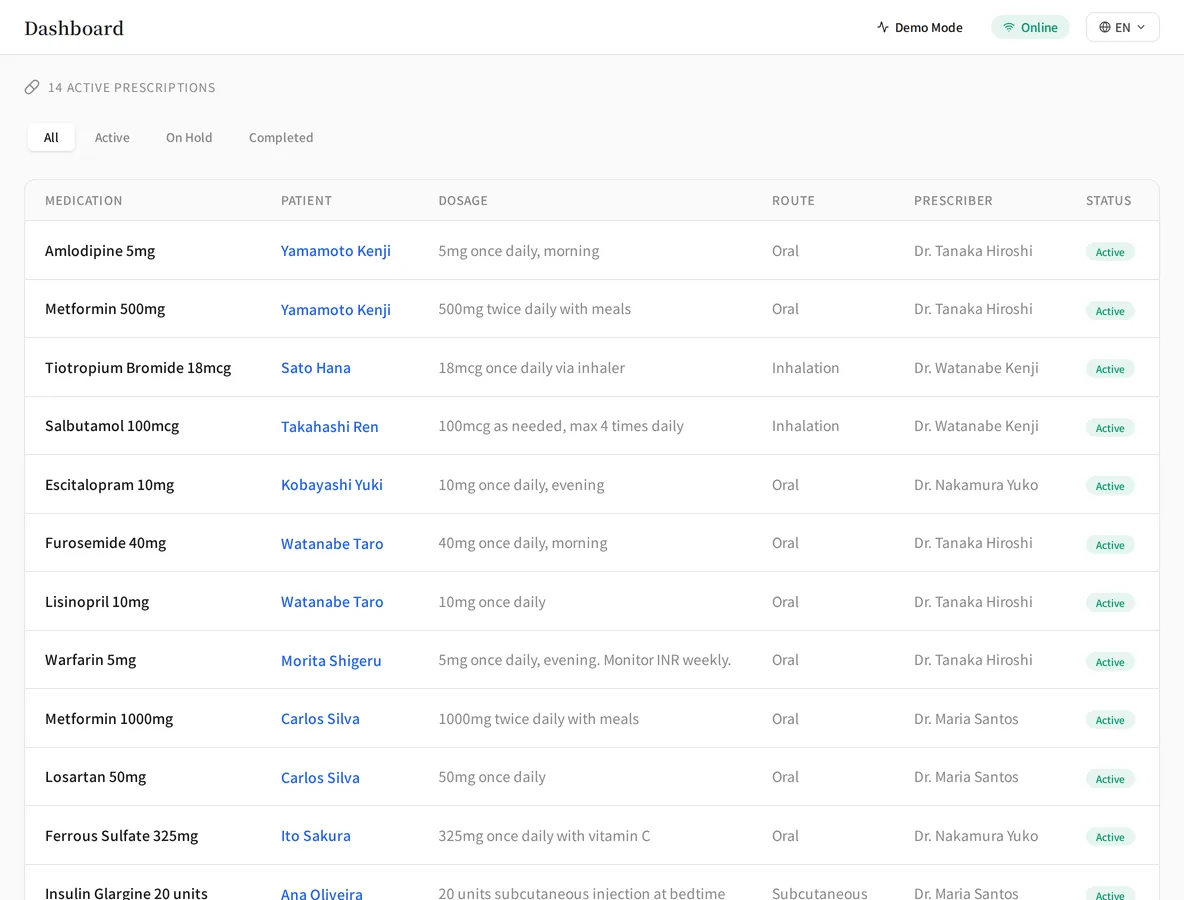
List of active prescriptions with dosage, route and prescriber
Active prescriptions
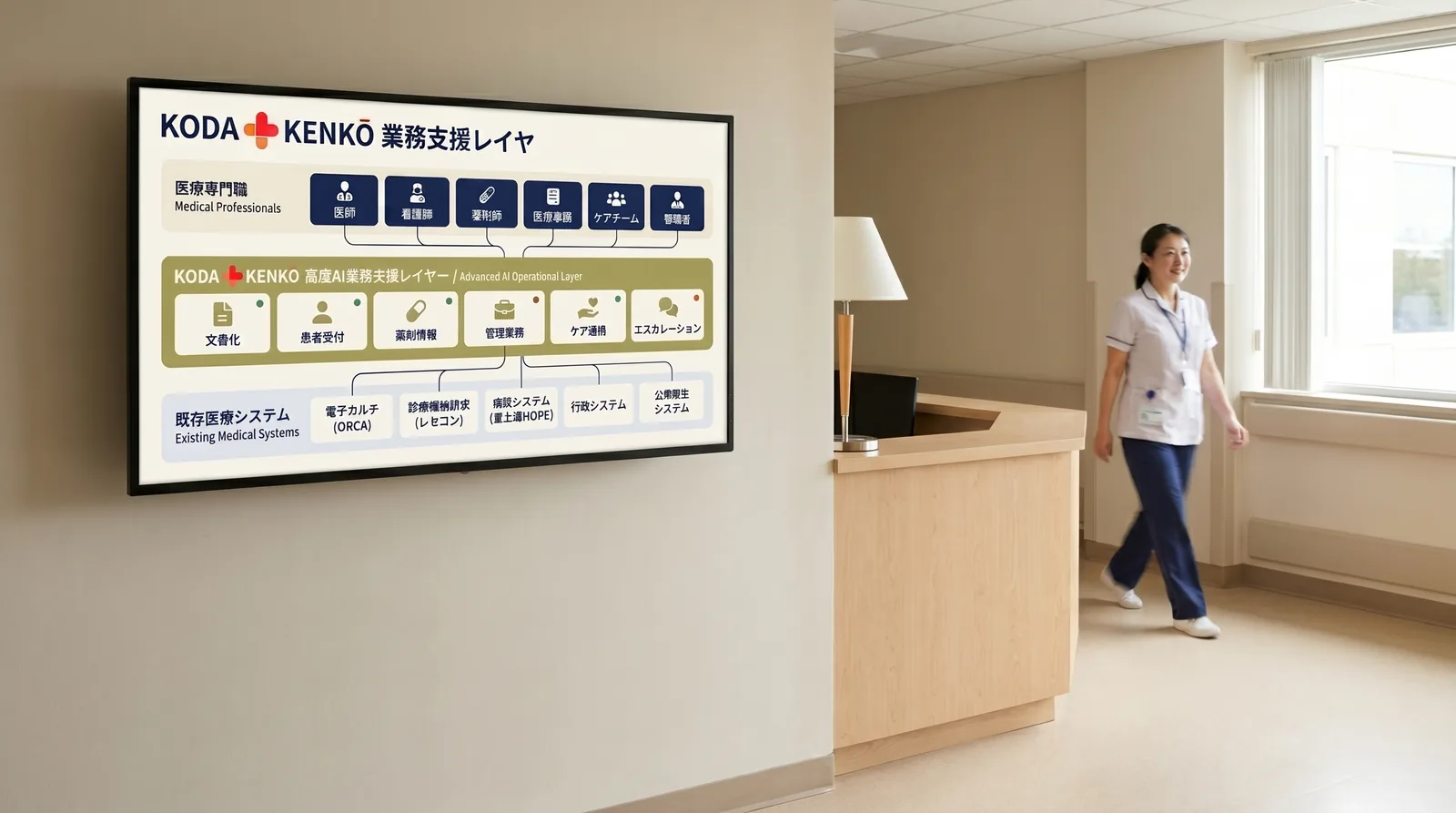
A clinical team reviewing how KODA Kenkō sits above the hospital’s existing systems

How it fits what you have

Above your existing systems. No rip-and-replace.

Kenkō works with the receipt computer and electronic medical record your hospital already runs. Staff keep the screens they know, and the drafts arrive where they already work.

ORCAMedicom-HRfDynamicsFujitsu HOPENEC MegaOakHR

Principles

Professionals decide, AI prepares

  1. The clerk approves every claim draft.Nothing is submitted without a person’s approval.
  2. The clinician reviews every note.Drafts become records only after review.
  3. The pharmacist reviews every check.Suggestions inform the pharmacist’s judgement; they never replace it.
  4. Japanese clinical documentation.Built for Japanese clinical practice, terminology and claims rules.
  5. Authorised access, full audit trail.Every view, every change and every approval is recorded.
  6. No rip-and-replace.Your existing systems stay where they are.

Foreign patients, understood and documented in Japanese

A patient who speaks Vietnamese, Portuguese or Nepali can describe symptoms in their own words. The doctor reads a Japanese record, ready to review.

What adopting it involves

  • Comes ready

    • Six modules writing to one operational record
    • Japanese clinical-note style and claims rules
    • HOT-code Japanese drug master
    • Patient intake in six languages, recorded in Japanese
    • Audit trail of every reviewer, timestamp and change
  • Configured for you

    • The connection to your receipt computer and electronic medical record
    • Which modules, departments and roles you start with
    • Who approves claims, notes and pharmacy checks
    • Your intake forms, referral formats and templates
  • Who sets it up

    • Your IT lead, with your system vendor, connects the existing systems
    • A clinical lead and the office manager define roles and approvals
    • The KODA Kenkō team configures the platform with you and trains your staff
  • What your staff learn

    • Reviewing an AI draft against its sources
    • Correcting, approving or returning it with a reason
    • Reading the audit trail of a case
  • Scoped separately

    • Connections to systems beyond those listed here
    • Hospital-specific forms and business rules
    • Migration of historical records

Markets and languages

Japan
Clinics and hospitals, all six modules. Records in Japanese; patient intake in English, Portuguese, Chinese, Vietnamese, Tagalog and Nepali.
Brazil
Through our delivery partner. Hospital networks in Brazil can start with KODA Flow and KODA Civium.

Start with one clinic and one workflow.

Tell us where the front desk or the doctors lose time today. We will show you the module that fits and the next practical step.

KODA Kenkō Clinical and Hospital Platform — hospital administration from A to Z · KODA Kenkō